


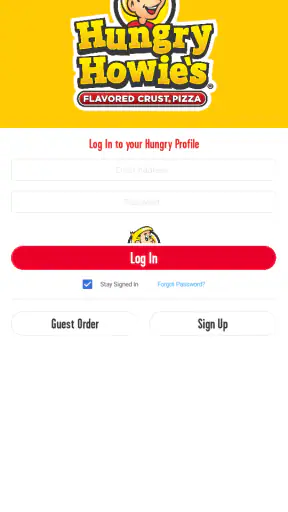
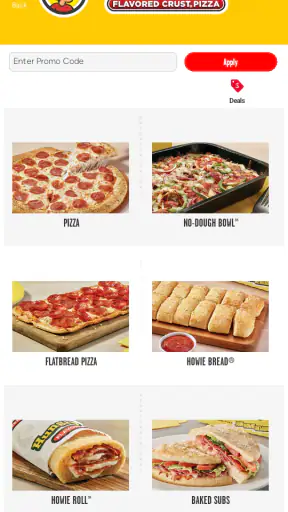
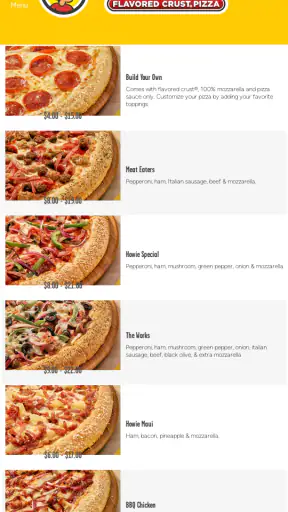
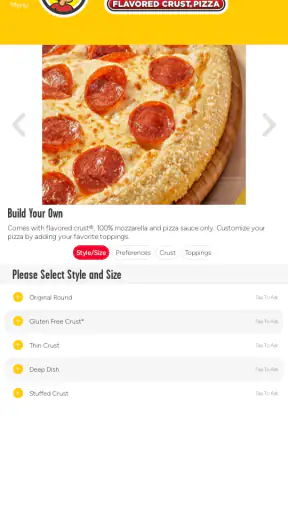
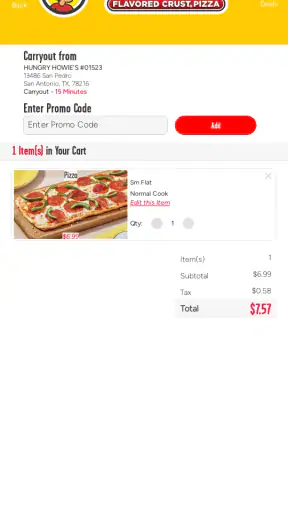
Ordering pizza sounds simple until the final step turns into a hunt for a missing address, an unavailable store, or a checkout screen that refuses to cooperate. I found Hungry Howie’s most useful when I treated it as a focused ordering tool rather than a general food-discovery app. It is built for delivery and pickup from Hungry Howie’s Pizza, and that narrow purpose is also its main strength: when I already know I want this chain, the app gives me a more direct route than searching through a broad restaurant marketplace.
Hungry Howie’s Pizza is a free Food & Drink app from Hungry Howie’s Pizza, aimed at everyone and available for Android devices running Android 8.0 or later. It has been around since Mar 15, 2011, and the current version is 2.59.0. Its store presence is substantial, with over a million installs, an average rating of 4.5 from around 129 thousand ratings, and roughly 40 thousand written reviews. Those figures suggest that it is not an obscure experiment, but they do not remove the need to understand how the ordering process behaves in everyday use.
Where an order can get stuck
The first point where I would expect confusion is store selection. A pizza-ordering app can only be useful if it connects the address with a location that serves it, and delivery coverage is not the same as simply finding a nearby restaurant. When I open the app, I think about the order in two parts: first, where the food should come from, and second, whether I want delivery or pickup. Keeping those decisions separate makes it easier to spot whether a problem is related to the restaurant choice or the order itself.
Pickup is usually the simpler route because I am going to the restaurant myself. Delivery introduces more opportunities for friction: the address has to be entered correctly, the selected location has to serve that area, and the order details have to remain consistent through checkout. If the app appears to reject an otherwise normal order, I would check the service mode and location before rebuilding the entire cart. A delivery address that falls outside one store’s area may work with another Hungry Howie’s location, while pickup may be available even when delivery is not.
The menu stage can also slow things down if I start customizing before deciding what kind of order I actually need. For a quick solo meal, I prefer to settle on the main item first and then review the available choices carefully. For a family order, I take a moment to separate each person’s preferences instead of repeatedly editing one item. This reduces the chance of carrying an unwanted modification into the final cart, especially when several similar items are involved.
Another practical sticking point is assuming that the app is a full replacement for every other way of ordering. It is not the same as a marketplace that combines many restaurants, and that distinction matters. Hungry Howie’s is a good fit when I have already chosen the chain and want its own ordering flow. If I am comparing several nearby restaurants, looking for cuisines outside pizza, or trying to coordinate one mixed order from different businesses, a broad delivery service is more convenient.
What I check before building the cart
I start by confirming that the app is installed on a compatible device and that I am using the current version shown in the app store. The minimum operating system is Android 8.0, so an older phone may be the real reason an installation or update fails. I also make sure the phone has a dependable connection before I begin. A weak connection can make a menu appear incomplete or cause a checkout action to seem unresponsive, even when the app itself has not actually lost the order.
Next, I decide whether I am ordering for pickup or delivery before spending time on customization. That sounds obvious, but it is one of the easiest ways to avoid redoing work. I also keep the destination details ready, including the apartment or unit information when relevant. Entering an incomplete address and trying to repair it at the last screen is more frustrating than preparing it at the start.
If the app asks me to choose a store, I pay attention to the selected location rather than assuming the nearest-looking result is automatically correct. A location can be nearby yet unsuitable for the delivery destination, while another location may handle the order more smoothly. I would also verify the phone’s date and time settings if the app behaves strangely around ordering availability, since incorrect device settings can interfere with many apps that depend on current information.
For a clean test, I use a straightforward order first. I do not begin troubleshooting with a heavily customized cart containing several items. A simple test helps identify whether the issue is the app’s basic connection to the restaurant or a particular menu choice. Once that basic path works, I can add the more complicated preferences one at a time.
Small setup habits that save time
Choose pickup or delivery before editing menu items.
Review the selected store after entering the destination.
Keep apartment, unit, or access instructions ready before checkout.
Use a stable connection and avoid switching networks during payment.
Test with a simple cart before troubleshooting a large customized order.
These checks are not exciting, but they are useful because they separate setup friction from a genuine app problem. I would rather spend a minute confirming the basics than repeatedly pressing the same checkout button without knowing whether the issue is the address, the connection, or the cart.
Recovering the workflow without starting over
When something goes wrong, my first rule is not to clear everything immediately. I pause and look for the last part of the process that clearly worked. If the menu loaded but the cart did not, I focus on the cart. If the cart is intact but checkout fails, I focus on the connection, location, and order details. This approach is especially helpful when I have already spent time customizing food and do not want to reconstruct the order from memory.
If a screen appears frozen, I wait briefly before tapping repeatedly. Multiple taps can create uncertainty about whether an action was accepted. I then move back one step if the app allows it, review the cart, and continue once. If that does not help, I close and reopen the app, then check whether the cart or selected location remains available. I avoid assuming that a blank or slow screen means the order was submitted.
The most important recovery habit is confirming the order status before trying again. If I submit a second time without checking, I risk creating duplicate orders. I look for an in-app confirmation or another clear indication that the first attempt completed. If I cannot tell, I would check the restaurant directly before placing a duplicate order, particularly when the timing matters or the cart is large.
For an address problem, I remove ambiguity rather than adding more text. I check spelling, unit details, and whether I accidentally selected a saved destination that is no longer appropriate. If delivery still does not work, I compare the result with pickup. That comparison is a useful diagnostic: if pickup proceeds but delivery does not, the issue is more likely connected to service coverage or address handling than to the entire application.
For a menu or customization problem, I return to the item and simplify it. I save the basic version of the order first, then add one preference and continue. This is a practical way to identify whether a particular combination is causing the interruption. It also prevents the common mistake of repeatedly editing an item while the app is still trying to refresh the previous change.
There is a trade-off here. A dedicated chain app can preserve a more direct relationship between the order and the restaurant, but it may offer fewer fallback choices than a marketplace. If Hungry Howie’s is the meal I want, that focus is convenient. If the app is having trouble and I need a different restaurant immediately, a general delivery app may be the better emergency option, even if it offers a less direct experience.
When the app may not be responsible
Not every failed order is caused by the application. A restaurant may be busy, a service area may be unavailable, or the phone may have lost a reliable connection. I try to distinguish these cases by observing the pattern. If menus load normally but the order cannot proceed for one location, I investigate the location and service mode. If several screens fail to load, I investigate the connection and app state. If other apps are also struggling, the phone or network deserves attention before I blame Hungry Howie’s.
Device storage and background activity can matter too. A phone that is nearly full or heavily occupied by other apps may behave poorly even when the ordering app is functioning normally. I close unnecessary apps, make sure the device has room to operate, and retry once. I do not recommend making major phone changes in the middle of a time-sensitive order; the safer approach is to preserve the cart if possible and use the simplest recovery step first.
Payment interruptions require extra care. I avoid repeatedly submitting payment when the result is unclear. Instead, I check whether the order was accepted, review any visible confirmation, and contact the restaurant if necessary. This is one of the situations where a few extra seconds of verification are more valuable than speed, because duplicate orders or confusion about the final order can be harder to fix than a slow screen.
For people who order regularly, I would develop a repeatable routine: confirm the location, choose the service mode, build the cart, review the destination, and verify the final result. The routine is more reliable than depending on memory, especially when ordering from a different address or using the app during a busy evening. It also makes it easier to explain the problem if support from the restaurant becomes necessary.
Who will appreciate the focused design
I think the app suits people who already prefer Hungry Howie’s and want a direct way to arrange delivery or pickup. It is also useful for households that order the same type of meal repeatedly, because a dedicated app keeps the process centered on one restaurant rather than making the user search through a large catalog. Someone placing a planned pickup order may find the focused flow less distracting than a marketplace filled with unrelated restaurants and promotions.
It is less suitable for someone who wants broad local comparison. The app does not solve the problem of choosing among many restaurant brands, and it is not the tool I would pick when I need to combine pizza with food from another business. A browser or marketplace may be a better choice for occasional diners who are not committed to Hungry Howie’s, while the dedicated app makes more sense for users who already know what they want.
The Everyone age rating makes it approachable for general household use, although the person placing an order should still review the destination and final cart carefully. I would not hand the process over entirely to a child or an inexperienced user when delivery details and payment are involved. The app can make ordering easier, but it does not replace the judgment needed to confirm where food is going and whether the order is correct.
My practical verdict after using it
Hungry Howie’s earns its place as a straightforward chain-ordering app because it keeps the goal clear: arrange Hungry Howie’s Pizza for pickup or delivery without passing through a broad restaurant marketplace. I like that focus, especially when I already have the restaurant in mind. The free price and wide availability make it easy to try, and its long presence on Android gives it the feel of an established ordering option rather than a temporary companion app.
My recommendation comes with a condition: use it with a little preparation. Confirm Android compatibility, select the correct store and service mode, enter the destination carefully, and avoid repeated submissions when a screen behaves slowly. Those habits address the most likely points of friction without turning a pizza order into a technical project. If the basic path works, the app is pleasantly direct; if it does not, the same checks help reveal whether the problem is the device, connection, address, restaurant coverage, or order state.
The best reason to choose this app is not that it replaces every food-ordering option; it is that it makes a Hungry Howie’s order more focused. I would recommend it to regular customers and to anyone who wants a dedicated pickup or delivery route. I would skip it when I need restaurant comparison, mixed orders, or a backup choice outside the chain. Used for the situation it was designed for, it is a practical tool, provided I take a moment to verify the details before confirming.


